
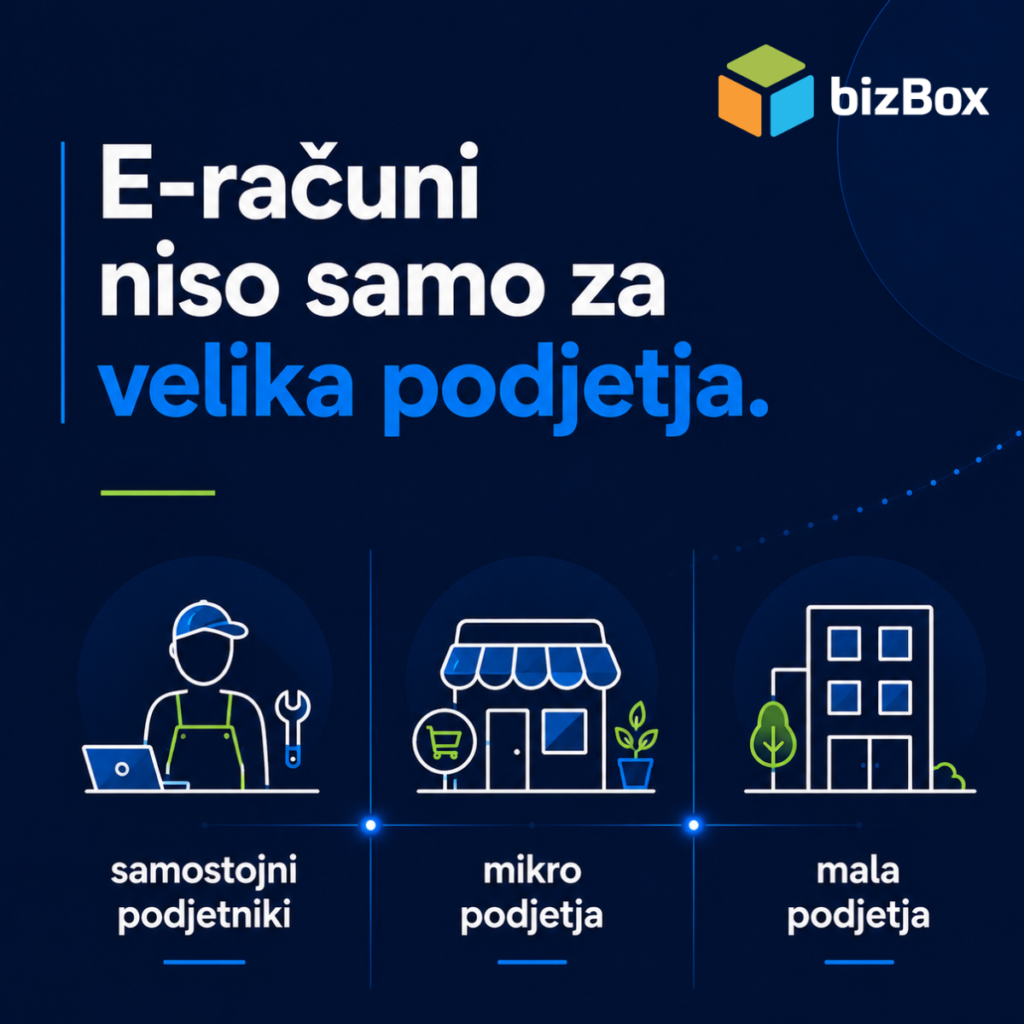
Does this even apply to me if I’m a sole proprietor or a small business?
“We’re too small.”
“This will apply to large companies.”
“We only issue a few invoices a month.”
These are among the most common responses from entrepreneurs when we talk about mandatory e-invoice exchange, which will come into force in Slovenia on January 1, 2028. But the truth is quite different.
Company size is not decisive
Many entrepreneurs mistakenly believe that e-invoices will be mandatory only for large companies with a high volume of invoices. In reality, the law does not distinguish between large and small companies. What matters most is whether you do business with other business entities. If you sell your services or products to other companies or receive invoices from them, the obligation will apply to you as well.
So who does the change affect?
If you are:
- a sole proprietor,
- a tradesperson,
- a consultant,
- a small shop,
- a local service provider,
- a micro or small business,
and you do business with other companies, you will need to ensure proper e-invoice exchange.
It doesn’t matter whether you issue five invoices a month or five hundred.
A few practical examples:
Tradesperson
An electrician issues an invoice to a construction company.
- After 2028, they will have to send the invoice as an e-invoice via an appropriate provider.
Consultant
A sole proprietor issues a few invoices each month to business clients.
- Mandatory e-invoice exchange will apply to them as well.
Local contractor
A plumber currently prepares invoices in Word or Excel and sends them by email.
- After 2028, this way of doing business between companies will no longer be sufficient.
It’s not just about issuing invoices
One of the biggest misconceptions is that companies focus mainly on issuing invoices. Equally important will be receipt of e-invoices.
Imagine a few completely ordinary situations:
- You take a business partner out for lunch or dinner and put the bill on the company or tax number.
- In a store, you buy office supplies or a new monitor for work and ask at the checkout for an invoice made out to the company.
- On a business trip, you refuel and have the invoice issued to the company.
In all these cases, you will receive the invoice as an e-invoice, so you will also need to have its receipt set up.
How to prepare?
The good news is that most companies won’t need a complete replacement of their business system.
There are several options:
- using your existing business software, if it supports e-invoices,
- using the bizBox web app, which is mainly suitable for companies without business software or for companies with a smaller number of invoices.
Most importantly, start preparations early enough.
Don’t wait until the last minute
2028 still seems far away today. But in practice, companies will need to review their business processes, how they issue invoices, how they receive invoices, and any adjustments to their business software.
Those who start preparations in time will make the transition without major complications.
E-invoices aren’t just a topic for large companies. They’re a topic for all companies that do business with other companies—regardless of their size.